Faceless YouTube Channel Ideas: 30 Niches Scored for Drawn Videos
30 faceless YouTube channel ideas in 10 groups, each with 3 video titles and an honest fit score, plus a 4-question test to pick and check your niche.
By AnimatedBoard · 15 min read
The best faceless YouTube channel ideas are niches where the topic carries the video, not a presenter: how things work, science, study skills, personal finance, business, psychology, history, stories and "what if" questions. Below are 30 ideas in 10 groups, each with its promise, audience, three example titles and an honest score for how well it suits drawn whiteboard or story videos. Then a four-question test helps you pick one, and a three-video method helps you check it before you commit.
Key takeaways
- 18 of these 30 ideas score ★★★ for drawn videos, 10 score ★★ and 2 score ★.
- A niche needs 20 scripts in you: at our American English voice's pace of about 160 words a minute, 20 eight-minute videos are roughly 25,000 words.
- On July 15, 2025, YouTube renamed its "repetitious content" policy to "inauthentic content". Templated, mass-produced videos can't be monetized (YouTube Help, checked October 2026).
- AI personas posing as human experts on health, legal, financial or political topics can't monetize under the same policy.
- Videos set as "made for kids" lose comments and personalized ads, among other features.
What makes a faceless YouTube channel idea work
A faceless channel idea works when viewers come for the information or the story, not a person, when you can keep making new videos, and when the visuals need no filming. This list is written for drawn videos, the kind a faceless YouTube video maker like ours makes: a hand draws each scene as the voice speaks, or each scene is an illustrated story panel.
So every idea carries a whiteboard fit score. It answers one question: does drawing make this topic clearer than the alternatives?
| Score | What it means | Typical topics |
|---|---|---|
| ★★★ Strong fit | The core of each video is an idea, a process, a cause and effect or a story. The drawing is the explanation. | Science questions, finance concepts, history stories, habits |
| ★★ Works with care | Drawn videos work, but you need strict accuracy, your own angle or a way to stand apart. | Space, mysteries, fables, fact lists |
| ★ Weak fit | Viewers expect real footage, a real screen or real sound. | Recipes, software click-throughs |
Our whiteboard scenes last 8 to 17 seconds, about 13 on average, so a 10-minute video needs around 45 drawings. Still deciding? The free YouTube video ideas generator gives you three ideas for any topic, no account needed.
Explainer and science channel ideas
Explainers answer one question per video, which is what whiteboard animation was born to do.
How things work
1. How everyday things work · ★★★. Promise: the hidden mechanics of daily objects. For curious adults and teens. Titles: "How a fridge moves heat out of the box" · "What happens when you tap your card to pay" · "How noise-cancelling headphones work". Why: a cut-away that builds as the voice explains is how these are taught.
2. Tech explained for non-tech people · ★★★. Promise: the technology behind daily life, without jargon. For office workers, parents and older viewers. Titles: "What 'the cloud' actually is" · "Why your phone battery wears out" · "How a password gets stolen". Why: data has nothing worth filming; boxes and arrows beat stock shots of servers.
3. Engineering and infrastructure · ★★★. Promise: how the big systems around you run. For engineering students and curious adults. Titles: "How a city gets clean water to your tap" · "Why bridges have gaps in them" · "How an elevator decides where to stop". Why: footage shows the outside; a drawing shows the inside.
Science and nature
4. Science questions · ★★★. Promise: one "why", answered in a few minutes. For students and lifelong learners. Titles: "Why the sky is blue but sunsets are red" · "Why ice floats" · "Where the wood of a tree comes from". Why: diagrams that develop step by step are the classic science explainer.
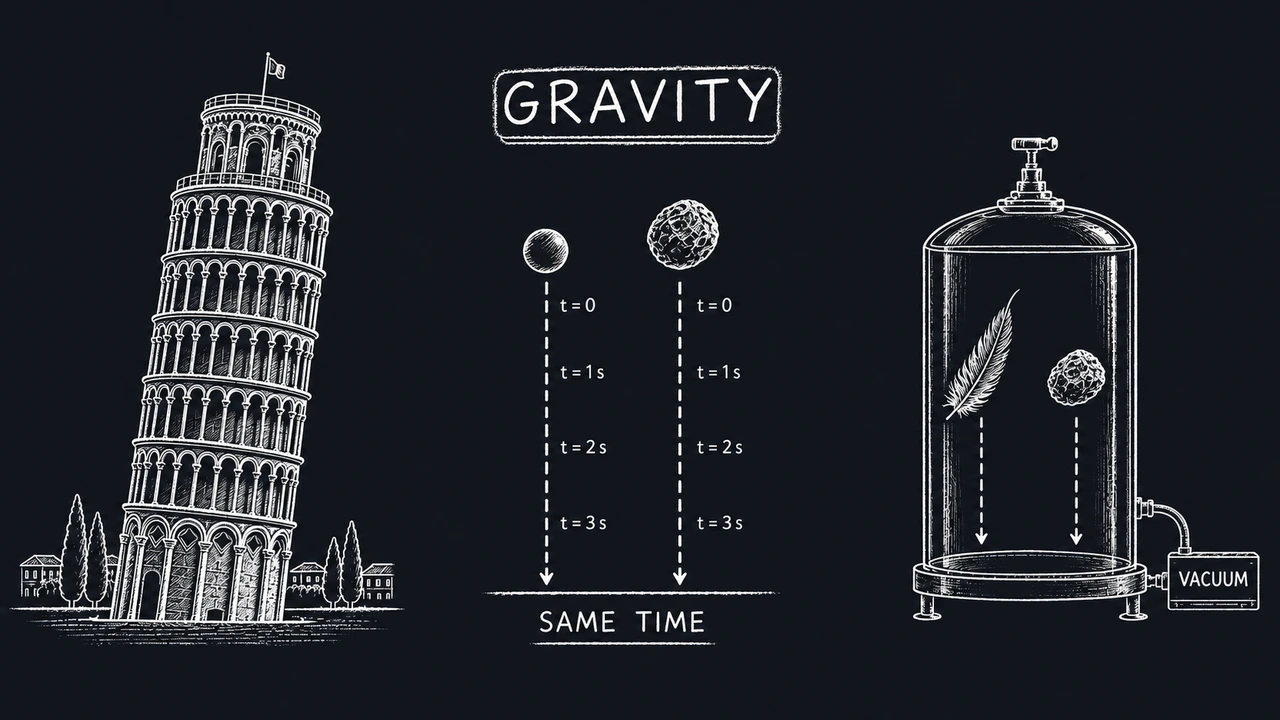
That chalkboard look is one of ten whiteboard animation styles you can compare with narrated samples.
5. Space and astronomy · ★★. Promise: the universe at a scale people can picture. For space fans of every age. Titles: "How big the Sun really is" · "Why we always see the same side of the Moon" · "What an orbit actually is". Why: orbits draw well, but many viewers come for telescope images. Mix both.
6. Animals and nature · ★★. Promise: the strange ways living things work. For families and nature lovers. Titles: "How octopuses change colour" · "How a beaver dam changes a river" · "Why some birds migrate so far". Why: you compete with wildlife footage, so win on explanation.
Education and study channel ideas
Education channels serve people with a need: an exam, homework, a concept missed in class.
7. Study skills and exam technique · ★★★. Promise: study less, remember more. For high-school and university students. Titles: "A four-review plan to remember anything" · "How to take notes you'll actually reread" · "The 24 hours before an exam". Why: a method drawn as a timeline is easier to copy than one described.
8. School subjects explained · ★★★. Promise: the topic your teacher rushed, explained slowly. For students aged 12 to 18 and the parents helping them. Titles: "Photosynthesis in four drawings" · "The French Revolution in ten minutes" · "Fractions: why you flip and multiply". Why: it's how they're taught in class. Our educational video maker can even write the script from your notes in a PDF or Word file.
9. Big ideas from non-fiction books · ★★. Promise: the one idea in a book worth keeping, and your verdict on it. For readers short on time. Titles: "Three ideas from a habits book I actually use" · "What productivity books get wrong" · "Two money books compared". Why: YouTube's reused-content rules exclude "content that exclusively features readings of other materials you did not originally create". Your analysis has to be the video.
Personal finance and business channel ideas
Money is abstract, which is why it suits drawings: a jar filling up says more than a spreadsheet.
10. Personal finance basics · ★★★. Promise: the money concepts school skipped. For young adults with a first salary. Titles: "The rule of 72: when your money doubles" · "Where your first paycheck should go first" · "Renting vs buying, without the sales pitch". One rule: explain concepts instead of giving personal advice, and never use an AI character posing as a human expert; YouTube's policy on AI personas in sensitive topics blocks monetization for that.
This 69-second animated infographic is one video in this niche. Its script is 166 words: a question, the rule, three worked examples, why it works and a twist at the end.
The rule of 72 · 1:09 · Our app made this video of about a minute from a plain-text script, in about a minute: our AI drew and narrated every scene. Nothing edited by hand. Longer videos take a few minutes more.
Read the transcript
How long does it take for your money to double? There's a quick way to estimate it without a calculator: the rule of seventy-two.
Divide seventy-two by the yearly interest rate, and you get roughly the number of years it takes to double.
At six percent a year, seventy-two divided by six is twelve: your money doubles in about twelve years. At eight percent, it takes about nine years. At two percent, about thirty-six.
Why does it work? Because of compound interest: each year you earn interest not only on what you put in, but also on the interest you've already earned.
The rule of seventy-two is a shortcut for that growth. It's most accurate for rates around eight percent, and close enough for everyday ones.
It also works in reverse. With inflation at three percent a year, prices double in about twenty-four years, so the same money buys half as much.
So next time you see an interest rate, divide seventy-two by it, and you'll see time in a new way.
Every sentence gives the drawing a job. If your finance scripts read like that, our infographic video maker has a look built for them.
11. Business case studies · ★★★. Promise: how business models make, or lose, money. For entrepreneurs and business students. Titles: "How a subscription business actually makes money" · "Why some franchises close in year two" · "The maths behind 'buy one, get one free'". Why: money drawn as flows beats stock clips of offices. Draw ideas, not logos.
12. Economics explained · ★★★. Promise: the news makes sense once you see the mechanism. For adults who follow the news. Titles: "Inflation explained with one loaf of bread" · "Why central banks raise interest rates" · "Supply and demand at a farmers' market". Why: cause-and-effect chains are a whiteboard's strength.
Psychology, productivity and self-improvement ideas
These niches are about invisible things, and a drawing makes them visible.
13. Psychology and cognitive biases · ★★★. Promise: why your brain tricks you, and what helps. For adults curious about decisions. Titles: "Anchoring: why the first price sticks" · "The sunk cost fallacy, or why you finish bad films" · "Why everything takes longer than planned". Why: each bias is a small story with a twist.
14. Productivity and habits · ★★★. Promise: small systems that make work easier. For students and professionals. Titles: "The two-minute rule" · "Why to-do lists fail" · "Habit stacking in five drawings". Here is that first title as a 51-second doodle video, from a 138-word script:
The two-minute rule · 0:51 · Our app made this video of about a minute from a plain-text script, in about a minute: our AI drew and narrated every scene. Nothing edited by hand. Longer videos take a few minutes more.
Read the transcript
Here's a trick for the tasks you keep putting off: the two-minute rule. If something takes less than two minutes, do it now.
Reply to that message, put the cup in the dishwasher, file that receipt. Small tasks cost more to remember than to finish.
The second half of the rule works on the big stuff. When a habit feels too big to start, shrink it until it takes two minutes. "Read more" becomes "read one page". "Go running" becomes "put on your running shoes".
It sounds too small to matter, and that's the point. The hardest part of most tasks is starting, and two minutes is short enough that your brain stops arguing. Once you've started, carrying on is easy.
So pick one thing you've been avoiding, shrink it to two minutes, and do it as soon as this video ends.
It works because it names objects ("put the cup in the dishwasher", "put on your running shoes") the hand can draw the moment they're said.
15. Philosophy and Stoicism · ★★. Promise: old ideas for modern problems. For young adults looking for a way of thinking. Titles: "What the Stoics meant by 'control'" · "Plato's cave in five minutes" · "Three thought experiments about choice". Why: the common quotes-over-a-background format is close to what YouTube lists as "scrolling text with minimal or no narrative". Bring an argument, not a quote.
History and story channel ideas
Drawings show places and times nobody filmed.
History
16. History told as stories · ★★★. Promise: the past through one person's day. For history fans and students. Titles: "A day in the life of a Roman legionary" · "How a medieval town got its water" · "Life aboard an 18th-century sailing ship". Why: our AI story video generator turns them into illustrated panels with a slow camera move.
17. The history of everyday objects · ★★★. Promise: the story behind something on your desk. For curious adults. Titles: "A short history of the fork" · "The story behind the QWERTY keyboard" · "How people told the time before clocks". Why: then and now, drawn side by side.
18. Historical mysteries · ★★. Promise: what we know, what we don't, the best theories. For true-mystery fans. Titles: "The lighthouse keepers who vanished in 1900" · "What happened to the Roanoke colony?" · "The Voynich manuscript". Why: it punishes sloppy facts. Separate facts from theories out loud.
Stories
19. Original bedtime stories · ★★★. Promise: a calm new story every week. For parents of children aged 3 to 7. Titles: "The fox who counted the stars" · "A lighthouse for a lost duckling" · "Milo the snail wants to go fast". Why: soft illustrated panels look like picture books.
Know the trade-off: videos set as made for kids lose comments, personalized ads, the notification bell and end screens, among other features, as YouTube's guide to setting your audience lists. Our kids story video maker page goes deeper.
20. Fables and folk tales retold · ★★. Promise: classic tales with a new twist. For families and teachers. Titles: "The tortoise and the hare, told by the hare" · "Clever-fox tales from three continents" · "Stone soup for a school play". Why: public-domain tales are free to adapt, but the same fable sits on hundreds of channels. Make the retelling yours.
21. Short biographies · ★★★. Promise: one remarkable life in ten minutes. For students and curious adults. Titles: "Ada Lovelace and the first computer program" · "Marie Curie's two Nobel Prizes" · "Ibn Battuta's journey across the medieval world". Why: a life is a story with chapters.
Tutorial, curious facts and health channel ideas
Skills and tutorials
22. Career and work skills · ★★★. Promise: the work skills nobody teaches. For graduates and early-career professionals. Titles: "How to answer 'tell me about yourself'" · "Write an email your boss reads to the end" · "Negotiate your first salary in three steps". Why: small drawn scenarios are easy to remember.
23. Language learning · ★★. Promise: grammar and vocabulary you can picture. For second-language learners. Titles: "Spanish 'ser' vs 'estar' in drawings" · "English tenses on one timeline" · "Kitchen words in French". Why: drawn vocabulary works; pronunciation needs slow native audio.
24. Software tutorials · ★. Promise: get a task done in a program. For its users. Titles: "What a pivot table does" · "Your first spreadsheet formula" · "Five editing shortcuts". Why: viewers want the real screen. Record it; draw only the concept.
Curious facts
25. What if…? · ★★★. Promise: a wild question, answered with real science. For teens and curious adults. Titles: "What if everyone jumped at once?" · "What if you dug through the Earth?" · "What if the oceans were fresh water?". Why: impossible scenes are exactly what you can't film.
26. Word origins · ★★★. Promise: the journey behind everyday words. For language lovers. Titles: "Where 'OK' came from" · "How the days of the week got their names" · "English words borrowed from Arabic". Why: a word travelling across a drawn map is the story.
27. Curious fact lists · ★★. Promise: facts that sound fake but aren't. For a broad, casual audience. Titles: "Seven animal facts that sound made up" · "Objects with a surprising first use" · "Maps that change how you see the world". Why: lists easily become interchangeable, which the inauthentic-content policy targets. Give each a theme; check every fact.
Health and food
28. How the body works · ★★. Promise: what's happening inside you. For students and curious adults. Titles: "How your heart works, chamber by chamber" · "How a vaccine trains your immune system" · "What your body does while you sleep". Why: explain, never diagnose, and send personal questions to a professional.
29. Food and cooking science · ★★. Promise: the science of your kitchen. For home cooks. Titles: "Why bread rises" · "Why onions make you cry" · "What browning does to flavour". Why: drawings rarely make food look appetizing.
30. Recipe channels · ★. Promise: dishes viewers can cook tonight. For home cooks. Titles: "One-pan pasta" · "Three breakfasts for a busy week" · "Four-ingredient bread". Why: people want to see the food. Film your hands.
Faceless niches that don't suit drawn videos
Some popular faceless niches gain nothing from drawing.
| Niche | What viewers come for | Better format |
|---|---|---|
| Gaming | The real gameplay | Screen capture with commentary |
| ASMR and ambient sound | The sound itself | Audio with simple visuals |
| Study-with-me and timers | Company while they work | A recorded desk |
| Clip compilations | Other people's content | Avoid: YouTube's reused-content rules |
| Product reviews | The real product in use | Filming your hands |
How to choose your niche: the Four Gates test
The Four Gates test is our rule of thumb for picking a faceless niche: score an idea from 0 to 2 on four questions and only build a channel on ideas that pass all four.
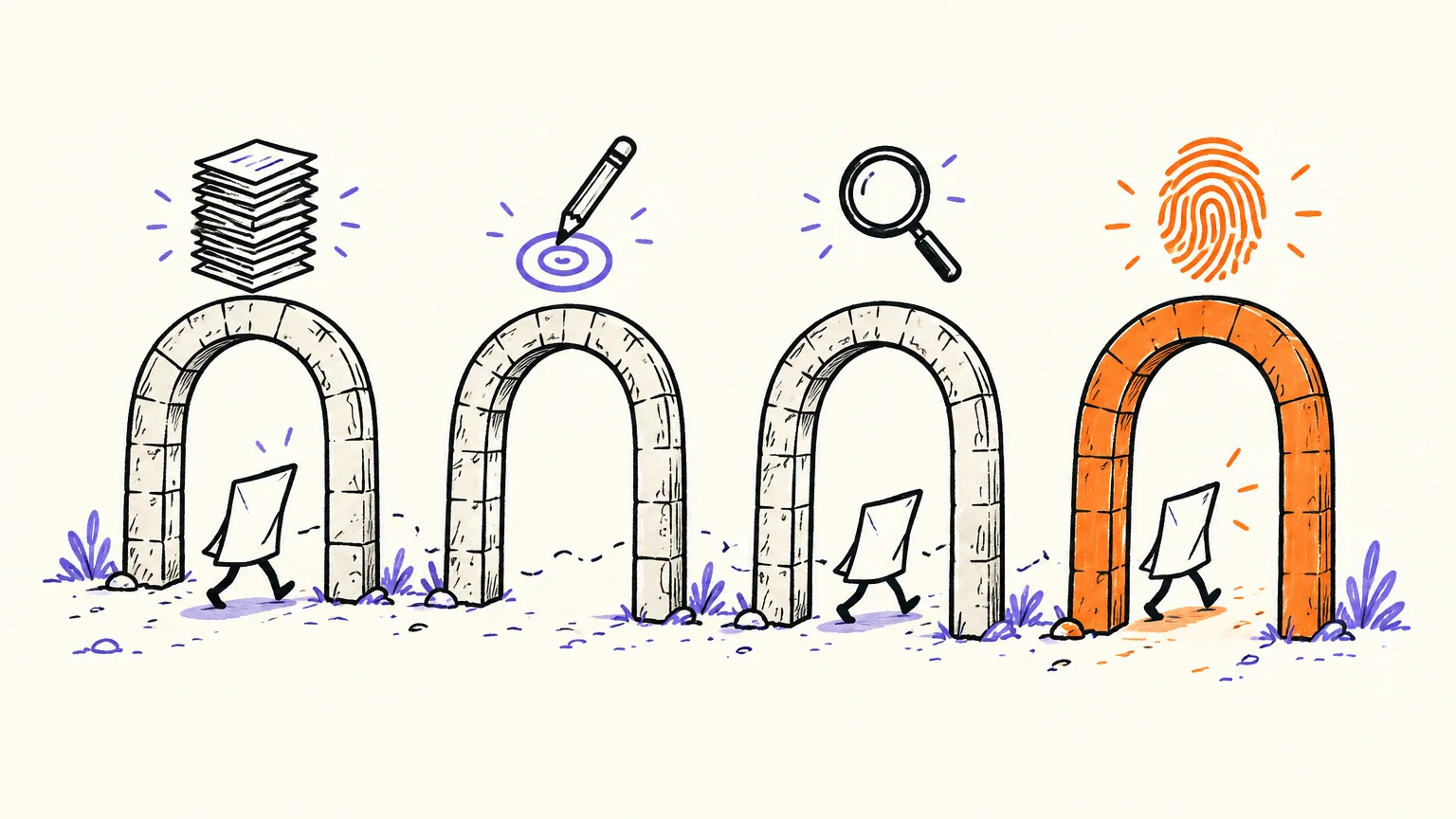
- Twenty scripts. Can you list 20 titles today, and would you enjoy writing them? Our script length calculator tells you how many words each video needs.
- Drawable. Is the core of a typical video a process, a comparison or a story? Use the fit scores above.
- Searched. Do people look for it on YouTube? See the next section.
- Yours. What do you add that the next channel doesn't: a profession, an experience, a language, a point of view?
| Gate | 0 points | 1 point | 2 points |
|---|---|---|---|
| Twenty scripts | Fewer than 10 titles | 10 to 19 titles | 20 titles or more |
| Drawable | ★ | ★★ | ★★★ |
| Searched | No suggestions, no recent videos | A few videos, mostly old | Suggestions and recent videos from several channels |
| Yours | Nothing you'd add | An angle or a format twist | Real experience or expertise |
Total of 7 or 8: go. 5 or 6: test with three videos first. 4 or less: rethink. A zero in "Twenty scripts" or "Yours" is a no at any total: the channel stalls, or looks like everyone else's. Three imagined ideas, scored:
| Hypothetical idea | Scripts | Drawable | Searched | Yours | Verdict |
|---|---|---|---|---|---|
| Personal finance for nurses, by a nurse | 2 | 2 | 2 | 2 | 8: go |
| Space facts | 2 | 1 | 2 | 0 | 5 with a zero: find an angle |
| Quick recipes | 2 | 0 | 2 | 1 | 5: test it, but filmed |
Once a niche passes, see how to start a faceless YouTube channel for the setup and how to write a YouTube script for the part that makes it yours.
How to validate a channel idea before you make 20 videos
Validate a channel idea in three moves: check what people search, check what already exists, then publish three test videos and compare them.
- Read the search box. Type your topic into YouTube's search box followed by "how", "why" or "what". The suggestions are searches people make, in their own words.
- Search your titles. Several recent videos from different channels mean the topic is watched. A video with far more views than its channel has subscribers suggests the topic itself pulls viewers.
- Find the gap. Watch the top three results and note what they skip or explain badly. That gap is your angle.
- Use the Trends tab. Once your channel exists, YouTube Studio's Trends tab shows your audience's top searches over the last 28 days and content gaps for Shorts.
- Make three videos on three different topics in the niche, over two or three weeks. Our guide on how to make a YouTube video covers each step.
- Compare, then commit. In YouTube Analytics, follow the video people clicked and kept watching.
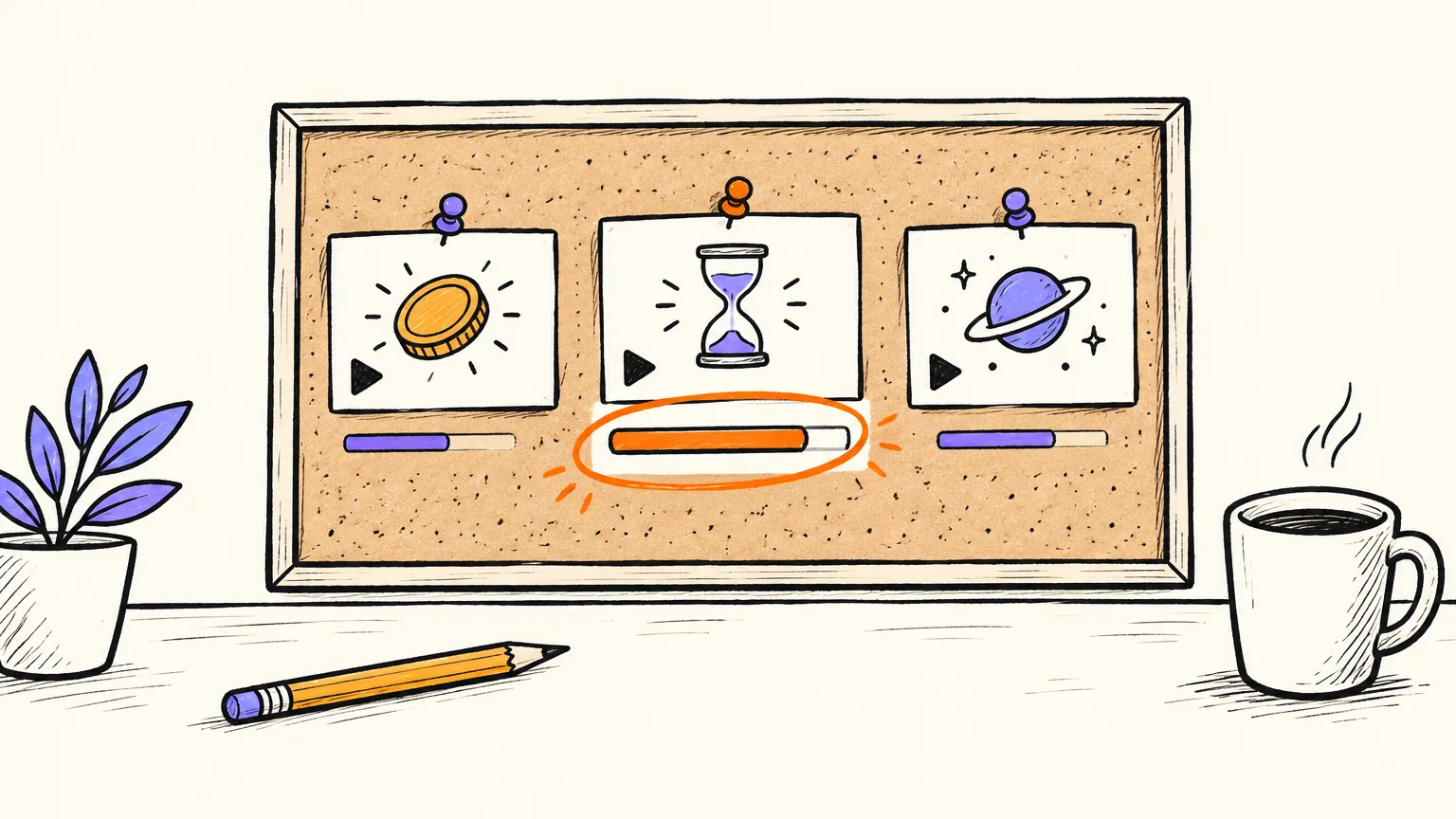
To test faster, cut each test video into vertical clips with our AI Shorts generator; Shorts from a finished video don't spend minutes. For more titles, run the video ideas generator again with your niche.
What YouTube treats as repetitive content
YouTube treats content as inauthentic when it's mass-produced or repetitive. On July 15, 2025 it renamed its "repetitious content" policy to "inauthentic content", according to its channel monetization policies, checked on October 7, 2026. Not allowed, in its words:
- "Image slideshows, templated storylines, or scrolling text with minimal or no narrative, commentary, or educational value".
- "AI-generated content made with generic or unoriginal templates".
- "Videos where characters are put in the same situation over and over again with the same outcome".
Allowed: the same intro and outro when "the bulk of your content is different", and series where "each video has a distinct storyline, focus, or concept". Using AI to edit your scripts is fine, as long as the final video shows your creative vision.
YouTube's altered or synthetic content disclosure applies only to realistic content. Clearly animated videos, and AI used for scripts, ideas or captions, don't need the label.
That's why our tool keeps your script word for word and draws every scene new. Still, no tool can promise monetization: YouTube reviews the whole channel.
FAQ
What is the best faceless YouTube channel idea for beginners?
A niche you know and can write 20 videos about, where each video explains one thing: study skills, finance basics, everyday science or productivity. They score high for drawn videos and need no filming.
Can a faceless YouTube channel be monetized?
Yes, if the content is original. YouTube's policies exclude mass-produced or repetitive content, not faceless or AI-assisted videos as such. Write your own scripts and make each video different in substance.
Which faceless niches have the least competition?
No reliable public figure answers that, so be wary of lists that claim one. Check it yourself: search your titles and look for recent videos from small channels with strong views.
How many videos should I make before choosing a niche?
Three test videos on different topics in one niche show which direction viewers click and watch. Then give the strongest direction 20 videos before judging.
Is a kids' story channel a good faceless idea?
It suits illustrated videos well, but made-for-kids videos lose comments, personalized ads and the notification bell. YouTube also counts characters stuck in the same situation with the same outcome as inauthentic, so every story needs its own plot.
Turn your niche into a first video
Pick the idea that passed all four gates and write its first script. Our faceless YouTube video maker turns that script into a narrated whiteboard or story video, and you can create a free account to make your first minute free, with no card.